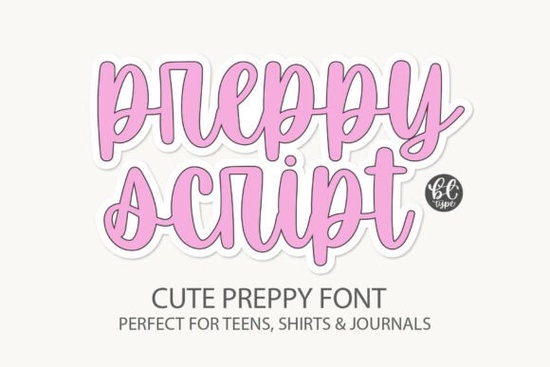
If you are looking for a handwritten typeface that balances casual charm with clean readability, Preppyscript Font might be exactly what your workspace needs. This brush-style script was built to sit neatly on apparel, stickers, and classroom materials without the heavy ink blobs or messy overlaps that often ruin cut files. Crafters and small shop owners keep it in their libraries because the smooth curves stay sharp even at smaller sizes, making it reliable for both digital mockups and physical products. The consistent baseline and slightly bold stroke weight help maintain clarity when you print on textured paper or cut through thin vinyl.
Why do brush scripts sometimes fail on cutting machines?
Many decorative typefaces struggle when fed into software like Cricut or Silhouette because overlapping strokes create jagged edges or disconnected layers. This specific design solves that problem with carefully spaced connections and a uniform line thickness. The included vector bonus file is already structured for clean machine paths, so you can skip manual tracing or compound path cleanup. If you have spent hours fixing broken nodes or simplifying shapes, you will notice how much smoother the workflow becomes. For crafters who want to compare how different script weights behave during weeding, browsing through options like veloura font script fonts can help you understand how stroke density changes handling time.
Can you mix capital and lowercase letters without ruining the flow?
Yes, the character set is engineered to pair smoothly across both cases. You can stack all caps for a structured label or blend lowercase letters with capital initials to get that relaxed, handwritten journal aesthetic. The spacing is tuned so the letters sit close enough to feel natural without touching in a way that causes printing smudges. When building seasonal layouts or teacher gift tags, try placing shorter words on the top line and longer phrases underneath. The natural rhythm guides the eye and saves you from constantly adjusting tracking sliders. If you want to see how tighter kerning affects readability on dark backgrounds, comparing this layout to handmade cupcakes font script fonts gives you a useful reference point.
How does the typeface perform on different print materials?
Screen previews often hide production flaws, but this font keeps its structure across multiple output methods. The open curves hold up well on matte stickers, glossy transfers, and direct-to-garment prints. When you scale it down for small tags or mug wraps, the inner spaces stay clear so the ink does not bleed into the loops. Print-on-demand sellers rely on this kind of consistency to avoid customer returns caused by unreadable text. You can also test it in Adobe Illustrator or Photoshop to adjust paragraph alignment before sending the file to your printer. Pairing it with a simple geometric sans serif usually improves visual hierarchy, especially on busy backdrops like patterned totes. If you need a reference for balancing decorative and functional text, checking bride minimalist font font script fonts shows how negative space impacts formal versus casual projects.
Does it work well for seasonal designs and classroom decor?
Teachers and classroom coordinators prefer script styles that feel approachable but still look organized. This brush script fits naturally into nameplates, bulletin boards, and reward charts because the strokes mimic natural handwriting while maintaining a steady baseline. During peak shopping seasons, the playful tone pairs easily with simple borders, star icons, or dashed frames. If you sell digital planners or printable worksheets, the clear structure helps maintain a professional tone even when the overall style stays casual. When planning your next batch of seasonal graphics, try testing how the font handles multi-line text by layering it over light watercolor backgrounds. For quick access to similar layouts and template files, keeping preppyscript font script fonts bookmarked will save you setup time during busy months.
What should you check before sending a file to production?
- Preview at 100 percent: Zoom in to check for stray nodes or overlapping paths that might confuse your cutter.
- Test the SVG first: Always import the vector version for machine projects instead of the TTF.
- Leave safe margins: Keep script text at least half an inch away from material edges to avoid trimming issues.
- Match weight to background: Use lighter backdrops for dark text or add a subtle stroke if the surface has heavy texture.
If you are setting up your canvas for a new order, open your preferred design program, load the SVG, type a short phrase, and run a single-material test before committing to a full print run. Save your spacing and scaling presets so you can reuse them across future product templates.
Next step checklist for your first layout:
- Install the TTF for screen work and keep the SVG in your cutting folder.
- Set up a canvas that matches your final product dimensions.
- Apply the text, adjust line height, and print a draft on plain paper.
- Export a high-resolution PNG for mockups and the raw SVG for production.
- Run a physical cut test on your exact material, then inspect the weed lines before scaling up.
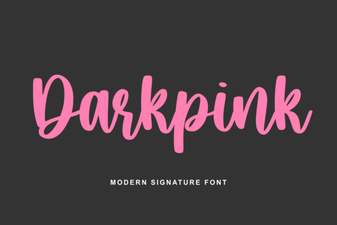 Dark Pink Font for Bold and Creative Designs
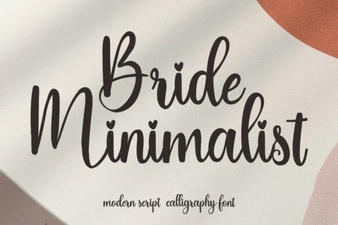 Minimalist Fonts for Wedding Stationery Design
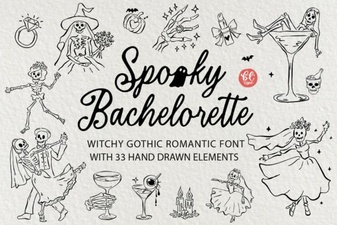 Spooky Bachelorette Party Invitation Font Ideas
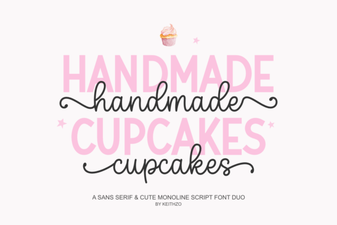 Fonts Inspired by Baking & Decorating Cupcakes
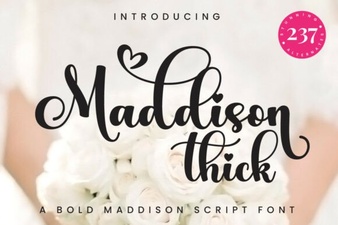 Creative Projects Using the Maddison Thick Font
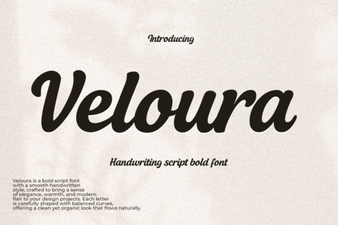 Veloura Font for Creative Projects