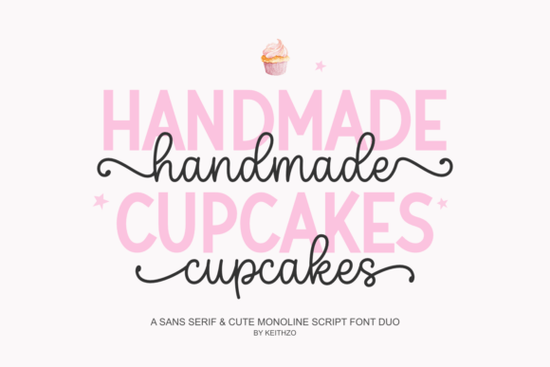
When you need typography that feels warm, approachable, and ready for commercial use, the Handmade Cupcakes Font offers a practical solution for makers and designers. This typeface pairs a clean display sans-serif with a relaxed monoline script, giving you two distinct voices in a single package. It works especially well for small product shops, custom apparel, and daily digital planners where you want to keep things readable but still visually friendly. Instead of forcing a single style across an entire layout, you can let the sans-serif handle clear headings while the script adds personality to subheaders and quotes.
How does this duo pairing handle everyday design tasks?
The combination was built to solve a common layout problem for crafters and POD sellers. You get a sturdy base for clear text, plus a flowing companion that balances the composition without overwhelming it. Print-on-demand shops frequently use it on cotton tees, canvas totes, and ceramic mugs because the spacing stays balanced even when printed at different scales. The contrast between thick and thin strokes remains consistent, which means less manual adjustment when scaling files for different product dimensions. If you usually lean toward cleaner layouts, pairing this script with the understated elegance found in similar minimalist typefaces can keep your mockups looking professional while maintaining a light, airy feel.
Which software supports it for crafting and branding?
You can drop this typeface directly into your standard workflow without converting files first. It runs smoothly in Canva for quick social templates, works inside Procreate for hand-lettered digital sketches, and installs cleanly in Silhouette Studio and Cricut Design Space for vinyl cutting and heat press projects. Small business owners appreciate that the character set covers multiple languages, so you can create bilingual packaging or multilingual greeting cards without hunting for separate files. When you need a bolder display option for seasonal promotions, checking out the versatile structure seen in event-ready alternatives can show you how letter spacing directly affects readability on smaller tags, stickers, and product hang tags.
How do I access the extra swashes and alternates?
Many beginners miss the extra glyphs because they do not know how to trigger them in their design software. The font includes private use area (PUA) encoding, which means the special characters, decorative swashes, and alternate letterforms are ready to use immediately in most modern editors. You just need to open your glyph panel, select the character map, and double-click the variation you want to drop into your text box. For crafters who love customizing quotes for wall art, pairing these extras with a soft contrast style used in pastel layouts helps the text pop without looking cluttered. Pro tip: always test a few alternates before finalizing your file to see which ligature sits best with your specific phrase. Keep an eye on baseline alignment when mixing swashes with standard caps.
What keeps this style useful beyond bakery themes?
Even though the name suggests desserts, the design stays neutral enough for almost any niche. The sans-serif handles corporate logos, recipe cards, and classroom printables with equal ease. The script works beautifully for wedding invitations, boutique labels, and personal branding kits. Designers who want a bit more weight without losing flow often compare it to the heavier script variations used in modern stationery to understand how line thickness changes the overall mood. The uppercase and lowercase sets share the same rounded terminals, so switching between them never feels jarring. When you need a preppy, polished finish for café menus or local event flyers, exploring the structured rhythm found in campus-style typography can give you a solid reference for margin spacing and column width.
How should I organize these files for client projects?
Keeping your font library tidy saves hours when deadlines approach. Store the installed .ttf or .otf files in a clearly labeled folder on your main drive and back them up to a secure cloud location. Always check the license terms before using the files for mass production or third-party client logos. Most commercial type licenses allow unlimited physical end-product sales, but they rarely let you resell the font file itself or embed it in free templates. Keep a simple spreadsheet with the download date, license type, and project codes so you can track usage without guessing later. Double-check that all team members or virtual assistants have the correct version before sending final proofs to print shops.
- Install the font files and restart your design software to refresh the complete type list.
- Open the glyph panel in your program to locate the PUA-encoded swashes before starting layout work.
- Set your body text size between 12pt and 24pt before adjusting the script headline to match your grid.
- Export a test print or vinyl preview at full scale to verify kerning on physical materials.
- Attach the original license agreement to your project folder for future audits or client handoffs.
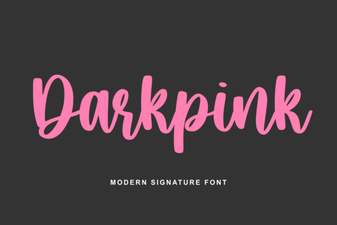 Dark Pink Font for Bold and Creative Designs
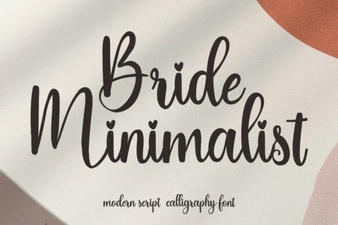 Minimalist Fonts for Wedding Stationery Design
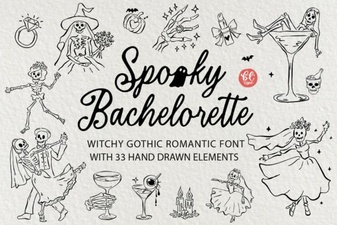 Spooky Bachelorette Party Invitation Font Ideas
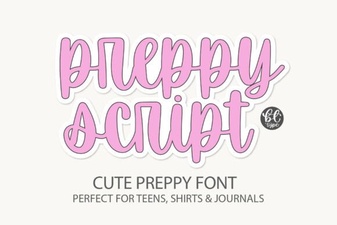 Preppyscript: Friendly Creative Font Styles
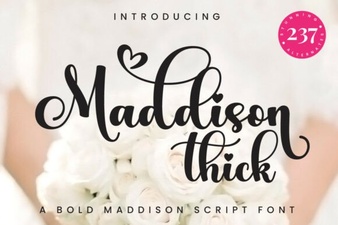 Creative Projects Using the Maddison Thick Font
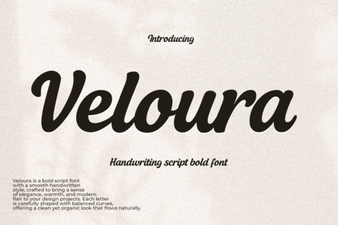 Veloura Font for Creative Projects