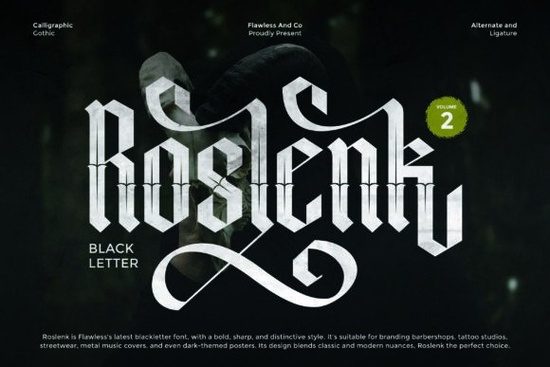
Finding a reliable typeface for edgy projects often means balancing historical craftsmanship with modern printing needs. The Roslenk Volume 2 Font bridges that gap by pairing traditional Gothic letterforms with sharp, contemporary edges. Designers and small business owners turn to this blackletter type family when they need immediate visual weight for barbershop branding, tattoo studio logos, or dark-themed posters. Because it keeps the classic calligraphic structure but removes unnecessary clutter, it works just as well on a heavy poster as it does on a small apparel tag.
What makes a modern blackletter font work for branding?
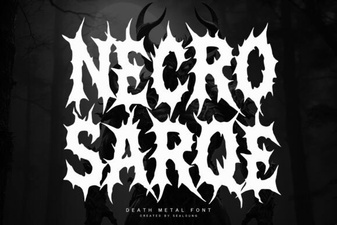
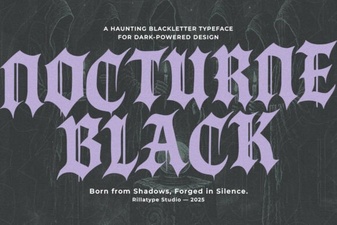
Traditional Gothic scripts often feel heavy or hard to read at small sizes. Modern adaptations solve this by tightening spacing and simplifying extreme stroke contrast. This keeps your typography legible on merchandise tags, storefront windows, and digital ads. You can compare this style with the Necrosarqe Regular design for softer terminals, or explore the Nocturne Black weight when you need heavier block lettering. Each variation handles differently on cotton tees, vinyl stickers, and poster stock, so ordering test prints is always worth the time.
How do I customize glyphs without design software experience?
Not everyone uses advanced typography tools, which makes Private Use Area encoding highly valuable. Standard keystrokes give you a clean baseline set. Need extra flair for a headline? Click through the built-in alternates. Swashes extend gracefully at letter ends, while ornamental variants replace standard terminals with sharper spikes. This setup saves hours of manual vector tracing for crafters working in Cricut Design Space, Silhouette Studio, or web-based editors.
- Swap out standard initials for decorative caps on apparel mockups and hang tags.
- Add subtle underline swashes to anchor podcast titles or event headers.
- Mix alternating character sets to create custom monograms for tattoo stencils.
Contrast prevents layouts from feeling cluttered. Combine heavy blackletter headers with a clean sans serif for body text. If your project needs more atmospheric edge, the Darkhusk collection offers a distressed variation that pairs well with vintage paper or concrete backgrounds. Keep hierarchy clear: use bold weights for primary headlines, and reserve lighter alternates for accents.
Always review licensing and output settings before finalizing files. You can check the full character set and commercial terms on the official product page. Export designs as high-resolution PNGs for web and PDFs for commercial printing. Rasterizing the type before sharing files with screen printers prevents accidental font substitution.
Why does spacing matter more than style for merchandise prints?
Many hobbyist designers focus purely on letterform shape, but tracking and line height actually determine whether a design succeeds on physical products. Blackletter fonts naturally carry tight side bearings, which means they can look excellent at large sizes but turn unreadable on small patches. Adjust tracking by ten to twenty percent to open the design without breaking the historical structure.
When preparing embroidery or heat transfer files, remember that fine lines may not stitch or press cleanly. Slightly increase stroke thickness in your vector editor, or switch to a heavier variant if the design calls for it. Always print a physical proof. Colors shift on dark fabrics, and fine serifs can blur under heat presses. Testing on your actual material stock catches these issues before bulk production begins.
What projects benefit most from sharp Gothic typography?
Industries that rely on heritage, craftsmanship, and raw aesthetics consistently see strong results with this type style. Tattoo artists use it for flash sheet headers because the angular cuts read clearly under studio lighting. Barbershops apply these letterforms to vintage window decals and price boards that match industrial interior themes. Streetwear brands add alternates to sleeve prints and woven labels to stand out in saturated drop cycles. Music producers pair the font with grainy photography for concert flyers and album art.
The key to success is restraint. Use the boldest characters for impact, then let negative space do the heavy lifting. Overusing ornamental swashes dilutes the visual message. A clean layout with one strong typographic choice always outperforms a crowded composition filled with decorative effects.
Quick steps to prepare your files
- Open your layout and set the primary headline to the boldest available weight.
- Adjust tracking between 5% and 15% depending on your final display size.
- Test alternate glyphs for key initials and verify PUA accessibility in your software.
- Print a color proof on the exact paper or fabric you plan to use for production.
- Outline or rasterize all text before sending files to commercial printers.
Start with a single headline, export a physical test print, and refine the spacing based on how it looks under real lighting. Once the balance feels right, scale the typography to match your broader branding system.
Get Started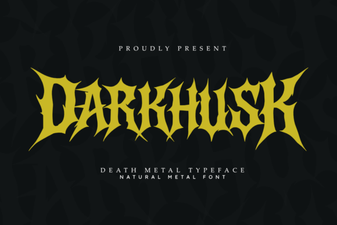 Darkhusk Font: Design Inspiration & Creative Projects
 Necrosarqe Fonts for Creative Typography Projects
 Nocturne Black Font: Elegant Designs for Your Projects
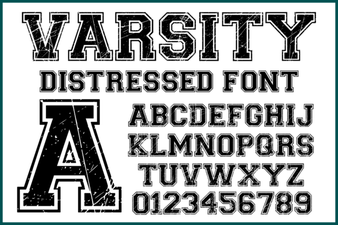 Varsity Distressed Font: Style and Design Ideas
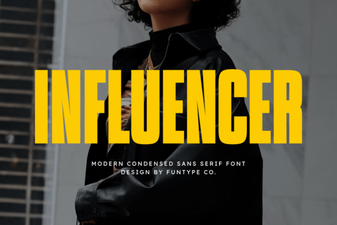 Crafting Font Styles for Social Media Influencers
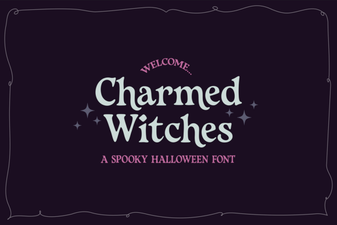 Charmed Witches Font for Your Creative Projects